The Best Coffee Grinders for Ultra-Fresh Mornings
We may earn a commission for purchases made using our links. Please see our disclosure to learn more.
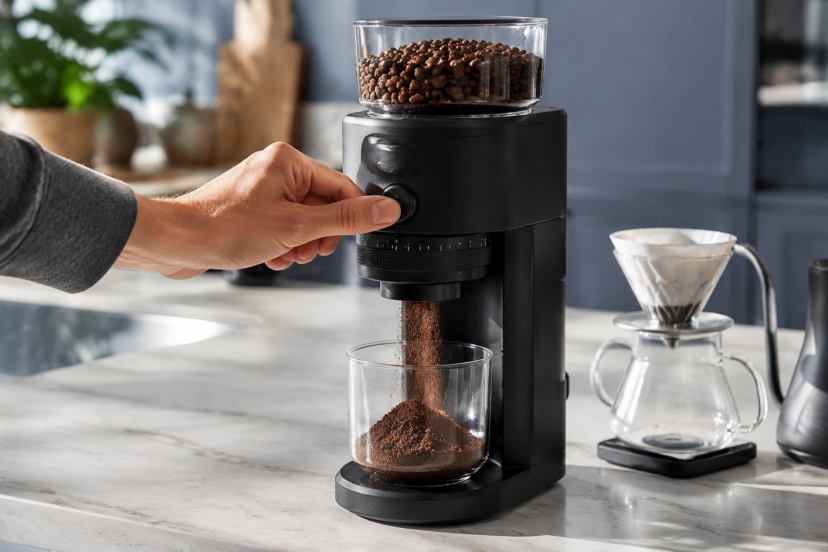
Coffee Grinders can improve flavor by producing evenly sized grounds for more consistent extraction. They also let you grind beans immediately before brewing, helping preserve their aroma and freshness. The right grind size also helps prevent coffee from tasting weak, sour, or overly bitter. Whether you prepare espresso, drip coffee, or French press, a quality burr grinder can produce a clearer, more balanced cup each morning.
Why Your Coffee Grinder Matters
Think of coffee grounds as thousands of tiny ingredients brewing at once. If some resemble powder while others look like pebbles, they will not extract at the same rate.
Very small particles can release too much material and add bitterness or dryness. Large particles may release too little, leaving the drink sour or weak. A good grinder narrows this difference, although no model creates perfectly identical grounds.
Research on particle size and espresso extraction shows how particle distribution affects the extraction process. Another scientific investigation into the role of fines in espresso found that different grinding technologies can produce different proportions of particles below 100 micrometers, even when the median grind size remains similar.
In practical terms, the number on the adjustment dial tells only part of the story. Burr quality, alignment, motor performance, and particle distribution all influence the final drink.
Burr Grinders vs. Blade Grinders
A blade grinder breaks coffee beans apart with a fast-rotating metal blade. It costs less and can also handle some spices, but it provides limited control. Extending the grinding time generally produces smaller coffee particles. Unfortunately, the resulting grounds usually contain a broad mixture of sizes.
Burr models grind beans through a narrow space between two textured components. You adjust the space between those surfaces to change the grind. This design offers greater control and produces more consistent results.
Conical burrs suit many home kitchens because they work well across several brewing styles. Flat burrs can produce excellent clarity and uniformity, although the grinder’s overall design matters more than burr shape alone.
Unless you need a multipurpose kitchen tool and have a very limited budget, choose a burr grinder for coffee.
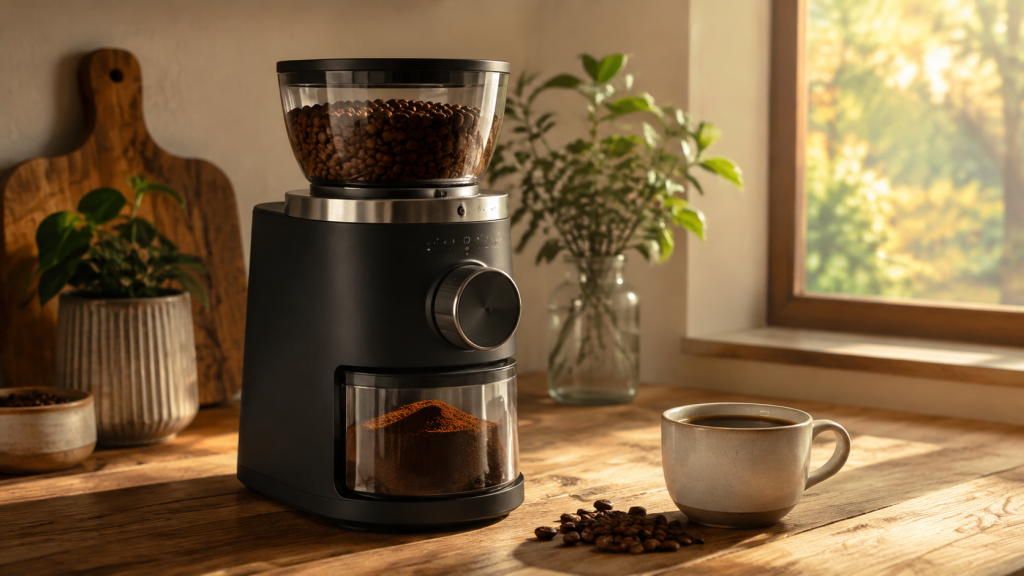
How to Choose Between Coffee Grinders
Start with your main brewing method. Espresso requires tiny adjustments because a slight grind change can alter shot time significantly. Cold brew and French press usually work best with a noticeably coarse grind. Pour-over falls somewhere between these extremes.
Also consider how you prepare coffee. A hopper-fed model offers speed when several people use the same beans. A single-dose grinder lets you weigh each portion and switch coffees without emptying a full hopper.
Useful features include:
- Clearly marked grind adjustments
- Low retention between doses
- Removable parts for easier cleaning
- A timer or dose control
- Anti-static technology
- A footprint that fits your counter
- Accessible replacement parts
Do not pay for an enormous adjustment range unless you will use it. A focused filter grinder may outperform an all-purpose model for pour-over but remain unsuitable for espresso.
Five Recommended Coffee Grinders
1. Baratza Virtuoso+ — Best Overall
With 40 settings, this versatile grinder works well for AeroPress, pour-over, drip, and French press. Its steel conical burrs produce consistent grounds, while the digital timer helps you repeat the same dose each morning.
The backlit grounds bin improves visibility, and readily available replacement parts may extend the grinder’s useful life. However, dedicated espresso drinkers may need finer adjustment control.
Best for: Daily brewing with several non-espresso methods.
2. OXO Brew Compact — Best for Small Kitchens
This slim grinder is about four inches wide but still provides 15 main settings and 29 micro-adjustments. Its 50-gram capacity suits small batches, and the removable burrs make cleaning easier.
It can grind enough coffee for up to six cups, depending on your preferred strength. The small chamber may feel limiting if you regularly prepare large pots.
Best for: Apartments, offices, and one- or two-person households.
3. Fellow Ode Gen 2 — Best for Pour-Over
Large flat burrs produce uniform grounds with excellent flavor clarity. Anti-static technology and a magnetic catch cup reduce mess, while quiet operation makes early grinding less disruptive.
Its single-dose design also makes switching between different beans simple. However, its grind range is intended for brewed coffee and does not extend fine enough for espresso.
Best for: Pour-over, drip, French press, and cold brew.
4. Breville Smart Grinder Pro — Best for Espresso Beginners
Sixty settings provide plenty of room to explore espresso and brewed coffee. The LCD shows the grind level, time, and dose, while the included cradles let you grind directly into common portafilter sizes.
Timed dosing adjusts in 0.2-second increments for more consistent results. Experienced espresso drinkers may eventually prefer a grinder with smaller adjustment steps.
Best for: Beginners who want helpful controls and broad versatility.
5. TIMEMORE Chestnut C2 — Best Manual Option
Its steel burr and stable dual-bearing design produce more consistent grounds than many basic hand mills. The compact 25-gram capacity works well for a single cup and fits easily into a travel bag.
It requires no electricity and creates little noise, making it useful at home or on the road. However, grinding fine enough for espresso takes more time and effort.
Best for: Travel, quiet mornings, and single-cup brewing.
Match the Grind to Your Brewing Method
Use grind labels as starting points rather than strict rules. Beans, equipment, water, and personal taste can shift the ideal setting.
A fine grind suits espresso because pressurized water passes through the coffee quickly. Medium-fine to medium grounds generally work for pour-over, AeroPress, and automatic drip machines. French press and cold brew usually perform better with coarse grounds.
Let taste guide your adjustment. If coffee tastes thin, sharply sour, or underdeveloped, grind slightly finer. If it tastes harsh, bitter, or drying, try a coarser setting. Adjust only one part of your recipe between brews to identify what improves the flavor.
For more method-specific advice, this guide to brewing coffee without a coffee maker explains how grind size works with several simple brewing techniques. Espresso drinkers can also compare additional options in its roundup of the best coffee grinders for espresso.
Keep Your Grinder and Beans Fresh
Store whole beans in an airtight, opaque container away from heat, moisture, and direct sunlight. Avoid filling a large hopper with more coffee than you will use soon, especially if it stands in a bright or warm spot.
Brush loose grounds from the burr area regularly. Oils and fine particles can collect inside the chamber, eventually affecting flavor and performance. Always follow the manufacturer’s instructions before removing burrs, and never rinse parts unless the manual identifies them as washable.
Finally, weigh your beans when possible. Consistent doses make it easier to judge grind changes and reproduce a cup you enjoyed.
Conclusion
The best Coffee Grinders do more than reduce beans to powder. They give you control over extraction, make recipes easier to repeat, and preserve the character of freshly roasted coffee.
The Baratza Virtuoso+ offers excellent everyday versatility, while the Fellow Ode Gen 2 stands out for filter brewing. Choose the Breville Smart Grinder Pro for an approachable espresso setup, the compact OXO for limited space, or the TIMEMORE Chestnut C2 for manual brewing. Match the grinder to how you actually make coffee, and fresher mornings will follow.
FAQs
Are expensive coffee grinders worth it?
They can be if you brew daily or want greater control. Higher-quality models often provide better burrs, tighter adjustments, sturdier construction, and lower retention. Casual drinkers can still get excellent results from a sensibly priced entry-level burr grinder.
When does a coffee grinder need cleaning?
Brush away loose grounds every week or two if you use it regularly. Perform a deeper cleaning according to the manual every one to three months. Oily dark-roast beans may require more frequent attention.
Can one grinder handle espresso and French press?
Some models cover both ranges, but producing grounds at each extreme does not guarantee equal performance. Espresso demands particularly precise adjustments. Choose an espresso-capable all-purpose grinder if you genuinely brew both styles.
Should I keep coffee beans in the hopper?
You can keep a small, frequently used amount there. For longer storage, use an airtight, opaque container and dose beans as needed. Many hoppers do not offer ideal protection from light and air.
Should you choose a hand grinder or an electric model?
Manual grinders cost less, run quietly, and travel easily. Electric models grind faster and require less effort, making them more practical for multiple servings. The better choice depends on your batch size and morning routine.