10 Must-Have Coffee Accessories For Kitchens
We may earn a commission for purchases made using our links. Please see our disclosure to learn more.
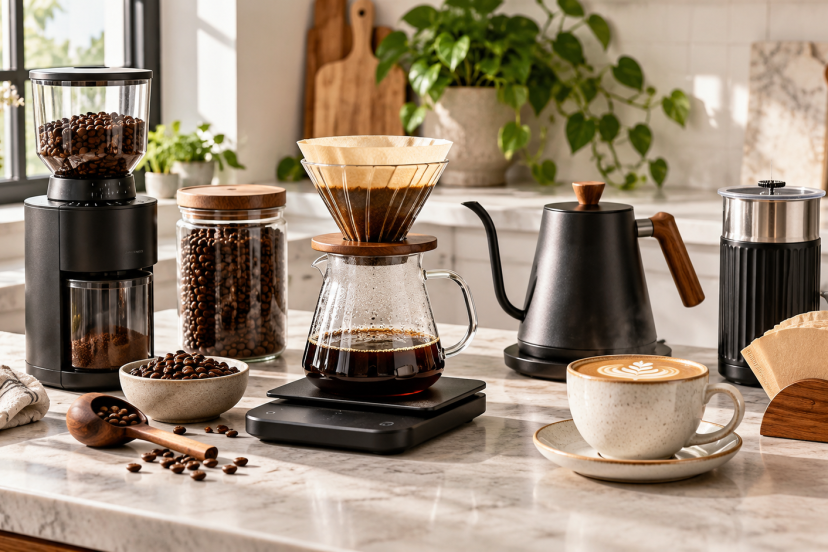
Making better coffee at home does not necessarily mean buying a huge espresso machine or turning half your kitchen into a café. The right coffee tools can make your morning setup smoother, tidier, and easier to repeat with consistent results. Some accessories give you better control over key brewing details, including grind size, coffee-to-water ratio, and water temperature. Others simply solve those small annoyances—stale beans, messy grounds, or flat milk—that can make home coffee less enjoyable. Here are 10 accessories worth making room for in your kitchen.
Why Good Coffee Accessories Make a Difference
Coffee brewing involves several variables working together. Change the grind, dose, water temperature, or brewing time, and the flavor can change noticeably.
That is why useful accessories should give you more control rather than simply look impressive on the counter.
Research into espresso extraction has shown that the distribution of fine coffee particles can affect water flow and extraction. A 2024 study on the role of fines in espresso extraction found that increasing the proportion of very fine particles reduced coffee-bed permeability and changed extraction behavior.
You do not need laboratory-level precision at home. Still, controlling the basics can make your morning coffee much easier to repeat.
1. Burr Coffee Grinder
If you buy whole beans, a burr grinder should sit near the top of your shopping list.
Unlike a blade grinder, which chops beans somewhat randomly, a burr grinder lets you adjust the space between its grinding surfaces. That gives you more control over particle size.
Different brewing methods also need different grinds. Espresso generally needs a fine setting, while French press and cold brew work better with coarser grounds.
If you want to explore specific models, this guide to choosing a coffee grinder explains what matters when comparing burrs, adjustment ranges, retention, and brewing styles.
2. Digital Coffee Scale
A kitchen spoon works when you simply want caffeine. A coffee scale becomes useful when you want to repeat yesterday’s unusually good cup.
Coffee beans vary in density, so measuring by weight gives you better consistency than measuring by volume.
You can weigh both your coffee and water, then keep the same brewing ratio each morning. A scale with a built-in timer makes pour-over brewing especially convenient.
For more choices, see this coffee scale comparison guide.
3. Gooseneck Kettle
A regular kettle heats water perfectly well, but its wide spout offers limited pouring control.
A gooseneck kettle has a narrow curved spout that lets you pour slowly and direct the water exactly where you want it. That makes it particularly useful for pour-over brewing.
Temperature control can also matter. Research examining espresso brewed under different temperature profiles found measurable changes in chemical extraction and sensory characteristics. Research on coffee brewing temperature shows why temperature deserves more attention than simply using the hottest water available.
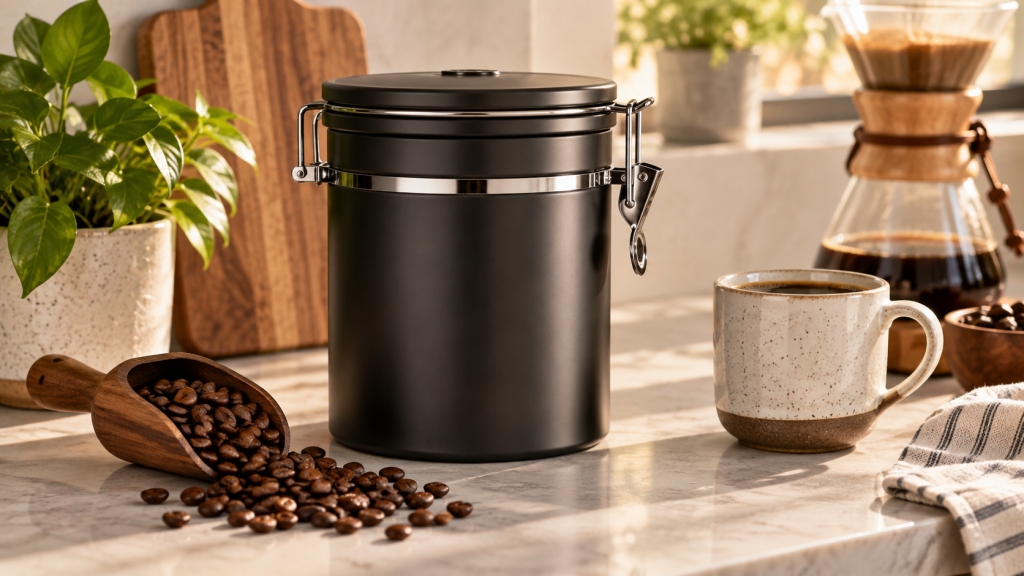
4. Airtight Coffee Canister
Good beans deserve better than an open bag sitting beside the stove.
An airtight canister helps protect coffee from excessive exposure to air, moisture, heat, and kitchen odors. An opaque container offers another advantage because it shields beans from direct light.
Keep the container somewhere cool and dry rather than next to the oven or in direct sunlight.
You also do not need a gigantic container. Buying reasonably fresh beans in smaller quantities usually makes more sense than storing several months’ worth at once.
5. Milk Frother
Love lattes, cappuccinos, or creamy iced coffee? A handheld milk frother is one of the cheapest ways to make your kitchen coffee feel a little more café-like.
It will not duplicate the microfoam created by a commercial steam wand, but it can quickly aerate warm or cold milk for everyday drinks.
You can also use one to blend cocoa, matcha, flavored syrups, or cold foam.
For iced-coffee fans, a frother works particularly well when making homemade vanilla sweet cream cold foam.
6. Dedicated Coffee Scoop
A scoop sounds almost too simple to include, yet it earns its place if you make drip coffee without weighing every batch.
Keeping a dedicated scoop beside your beans also makes rushed mornings easier.
Just remember that scoops measure volume rather than weight. Use yours as a convenient everyday tool rather than assuming every scoop contains exactly the same amount of coffee.
7. Quality Coffee Filters
Your filter affects more than cleanup.
Paper filters trap much of the sediment and oils, usually producing a clean cup with good flavor clarity. Reusable metal filters allow more oils and tiny particles through, which can create a heavier body.
Neither approach is automatically better. Choose based on the texture and maintenance you prefer.
Before buying filters, check the size and shape your brewer requires. An almost-right filter has an uncanny ability to become a 7 a.m. kitchen disaster.
8. Coffee Server or Carafe
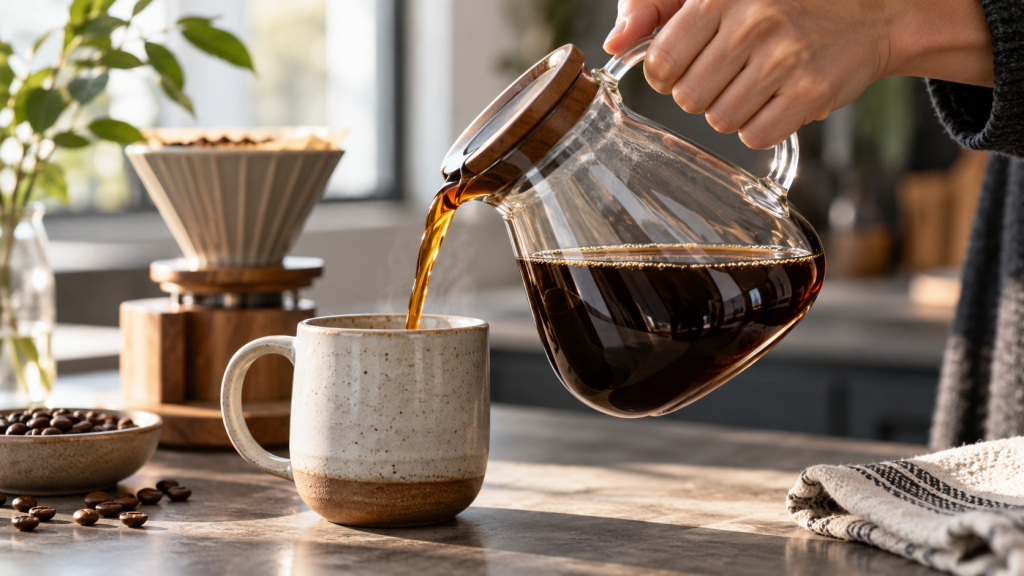
Pour-over drinkers often brew directly into a mug, but a coffee server becomes useful when making more than one serving.
It lets you swirl the finished brew before pouring, which helps mix the different stages of extraction together.
A server also keeps your brewing area organized and makes serving guests easier. Choose heat-resistant glass if you like watching the brewing process, or an insulated carafe when heat retention matters more.
9. Coffee Thermometer
You do not need a thermometer for every cup, especially if your electric kettle already displays the water temperature.
However, it remains handy when using a stovetop kettle or experimenting with different brewing temperatures.
Rather than relying on guesswork, you can see how changing the water temperature affects the cup. That can be especially useful when switching between darker and lighter roasted coffees.
10. Coffee Cleaning Brush
This may be the least exciting accessory on the list—and one of the most useful.
Small brushes reach coffee grounds that collect around grinder burrs, dosing areas, espresso baskets, and other tight spaces.
Regular cleaning also stops yesterday’s coffee debris from becoming a permanent part of your kitchen décor.
Choose a brush with firm bristles and a handle long enough to reach into your equipment comfortably. Always follow the manufacturer’s cleaning instructions before opening or washing grinder components.
How to Choose Coffee Accessories for Your Kitchen
Start with the way you already drink coffee.
If you make pour-over every morning, spend your budget on a capable grinder, scale, and kettle before buying decorative accessories. Espresso drinkers may benefit more from precision tools and cleaning equipment. Someone who mainly drinks iced coffee might get more everyday value from a grinder, storage canister, and frother.
Counter space matters too. Ten useful accessories become considerably less useful when you have to remove six appliances just to make toast.
Choose accessories that make a noticeable difference in the way you already prepare coffee. You can always add more later.
Conclusion
The best coffee accessories make brewing easier to control without making it unnecessarily complicated. A burr grinder and scale can improve consistency, while a gooseneck kettle gives manual brewers greater pouring control. Storage containers, filters, frothers, servers, thermometers, scoops, and cleaning brushes take care of the practical details that make a home coffee station work smoothly. You do not need all ten on day one. Start with the accessories that fit your favorite brewing method, learn what changes your coffee for the better, and build your setup from there.
FAQs
What coffee accessories should a beginner buy first?
A quality burr grinder and an accurate digital scale are two of the most useful tools to begin with. They help you control grind size and coffee-to-water ratios, two variables that influence almost every brewing method.
Is a coffee scale really necessary?
It is not essential for making coffee, but it makes recipes much easier to repeat. Measuring coffee and water by weight removes much of the variation caused by scoops and guesswork.
Should you choose a burr grinder instead of a blade grinder?
For coffee brewing, a burr grinder generally provides better control over grind size and produces a more useful particle distribution. That makes dialing in different brewing methods easier.
Is a gooseneck kettle worth using for coffee?
Not for every brewing method. Automatic drip machines, French presses, and many immersion brewers work fine without one. A gooseneck kettle becomes especially useful for pour-over because it gives you more control over the speed and placement of water.
How should coffee beans be stored at home?
Keep your coffee beans sealed tightly and place them somewhere that stays cool, dry, and out of the sun. Avoid placing them near the stove, a sunny window, or other areas exposed to frequent heat and moisture.