Breve Coffee vs. Latte: What’s the Difference?
We may earn a commission for purchases made using our links. Please see our disclosure to learn more.
If you enjoy a creamy latte but sometimes wish it had a richer, smoother taste, a breve might be worth trying. At first glance, these two espresso drinks look almost identical, but their ingredients make a noticeable difference. While a latte uses steamed milk, breve coffee replaces it with half-and-half, creating a thicker texture and a more indulgent flavor. That difference also affects the calories, richness, and overall drinking experience. So, which one deserves a spot in your coffee routine? Let’s compare their ingredients, taste, caffeine content, and nutritional differences, along with a few simple tips for making a delicious breve at home.
What Is Breve Coffee?
Known as caffè breve or breve latte, breve coffee combines espresso with steamed half-and-half, giving it a richer, creamier texture than drinks made with regular milk.
Half-and-half contains milk and cream, giving the beverage a noticeably richer consistency than a standard latte.
Its defining characteristics include:
- A thick, smooth, creamy texture.
- A mellow espresso flavor.
- A naturally rich taste without requiring flavored syrup.
- A soft layer of foam when properly steamed.
Although breve has an Italian name, it is generally considered an American variation of traditional Italian espresso drinks.
Unlike a latte, which usually contains considerably more milk than espresso, a breve may use a smaller proportion of dairy. However, recipes and serving sizes vary between coffee shops.
What Is a Latte?
A latte combines freshly brewed espresso with warm, steamed milk and a light, silky layer of foam on top.
Most coffee shops prepare it using one or two espresso shots, followed by several ounces of steamed milk.
The result is a smooth, balanced beverage that softens espresso’s bitterness without completely hiding its flavor.
Whole milk creates a creamy texture, while reduced-fat milk produces a lighter drink. Some cafés also offer oat, soy, and almond milk alternatives.
Lattes work particularly well with flavored syrups because their relatively mild coffee flavor pairs easily with vanilla, caramel, and chocolate.
If you’re curious about other espresso drinks, this comparison of macchiatos and lattes explains how their milk proportions affect flavor and texture.
Breve Coffee vs. Latte: Key Differences
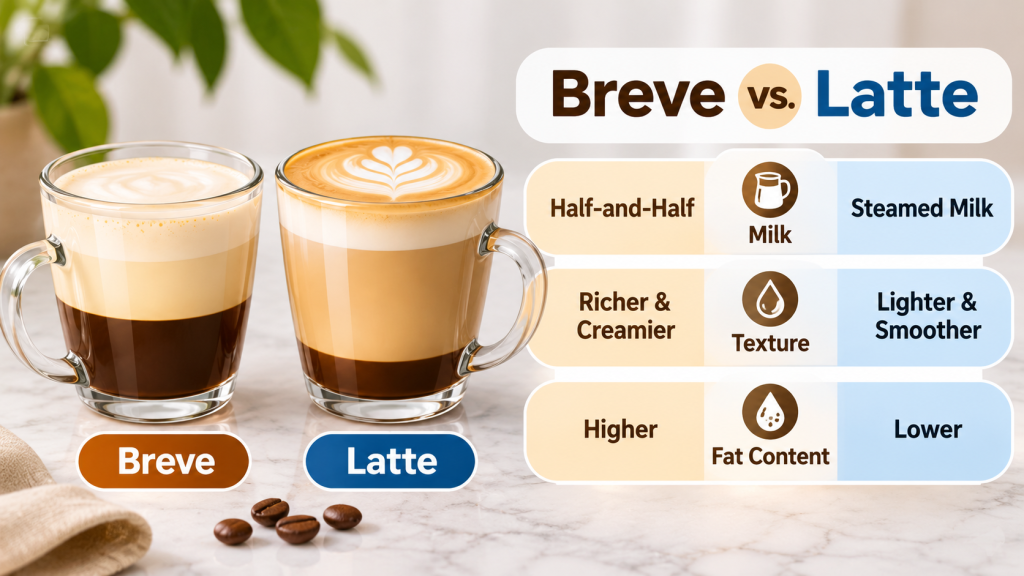
The biggest difference between these beverages is their dairy ingredient. However, that single substitution also affects mouthfeel, nutritional content, and overall drinking experience.
| Feature | Breve Coffee | Latte |
| Main ingredients | Espresso and half-and-half | Espresso and steamed milk |
| Texture | Thick and velvety | Smooth and lighter |
| Flavor | Rich, creamy, mellow | Balanced and milky |
| Dairy fat | Higher | Usually lower |
| Calories | Generally higher at equal volumes | Generally lower |
| Foam | Creamy, often denser | Fine, silky microfoam |
| Caffeine | Depends on espresso shots | Depends on espresso shots |
| Best for | Rich, indulgent coffee | Everyday creamy coffee |
Both drinks can taste excellent when prepared with quality espresso. Choosing between them mainly depends on how much richness you enjoy.
How Does Breve Coffee Taste?
Imagine the bold flavor of espresso combined with the smooth richness of cream. That’s the general experience of drinking a breve.
The higher fat content gives it a fuller mouthfeel and softens some of coffee’s sharper flavors.
Because of its creamy texture, breve coffee can also seem sweeter than a latte, even without added sugar.
However, half-and-half still contains naturally occurring milk sugars, and the drink isn’t necessarily sweeter in terms of actual sugar content.
Espresso selection matters, too. Darker roasts can create stronger chocolate-like flavors, while medium roasts may bring more noticeable caramel or nutty notes.
A well-prepared breve should taste rich without becoming greasy or completely masking the espresso.
Calories and Nutritional Differences
Breve coffee generally contains more calories and saturated fat than a latte of the same size.
That’s because half-and-half contains considerably more fat than whole milk.
According to USDA FoodData Central, standard half-and-half provides approximately 131 calories per 100 grams, compared with roughly 61 calories for whole milk.
CarbTable+2
These numbers describe the dairy ingredients, not finished coffee drinks.
Actual beverage calories depend on the amount of dairy, espresso, flavored syrups, and toppings.
For someone who enjoys a creamy coffee occasionally, breve can be an appealing choice. Those monitoring calorie or saturated fat intake may prefer a smaller breve or a latte made with regular milk.
Neither drink automatically qualifies as healthier; portion size and overall dietary habits matter more.
Breve vs. Latte: Is There a Difference in Caffeine Levels?
Neither drink is naturally higher in caffeine, since the amount depends on how many espresso shots are used.
Both beverages get nearly all their caffeine from espresso, so the number of shots and coffee used determine caffeine content.
For example, a breve containing two espresso shots will have approximately the same caffeine as a latte containing two shots prepared with the same coffee.
Half-and-half makes the beverage taste richer, but it doesn’t increase caffeine.
Drink size can be misleading, too. A large latte may contain more dairy without necessarily containing more espresso.
If caffeine matters to you, check the number of shots rather than relying on the beverage’s name.
How to Make Breve Coffee at Home
Making a homemade breve doesn’t require complicated ingredients. With espresso and properly heated half-and-half, you can prepare a creamy café-style drink in minutes.
Ingredients
- 1 double shot of espresso (approximately 2 ounces)
- 3–4 ounces of half-and-half
- Optional: vanilla syrup, cinnamon, or cocoa powder
Step-by-Step Instructions
1. Prepare the espresso.
Brew a fresh double shot using an espresso machine. Choose beans with a flavor you enjoy, preferably freshly ground.
2. Heat the half-and-half.
Pour the half-and-half into a steaming pitcher. Heat it gently using a steam wand, aiming for approximately 140–150°F (60–66°C).
3. Create a smooth texture.
Introduce a little air while steaming, then keep the liquid circulating to produce fine bubbles. Avoid creating excessive, stiff foam.
4. Combine the ingredients.
Transfer the freshly brewed espresso into a cup that you’ve warmed beforehand. Slowly add the steamed half-and-half, allowing the creamy foam to settle on top.
5. Adjust the flavor.
Taste your breve before adding sweetener. If you prefer something sweeter, try a small amount of vanilla syrup or a sprinkle of cinnamon.
Your homemade breve is ready to enjoy.
Recommended Products
Making breve coffee at home is easier with the right equipment. Here are five useful tools for preparing espresso, frothing half-and-half, and improving consistency.
1. De’Longhi Stilosa Manual Espresso Machine – A compact espresso machine with a built-in steam wand for brewing espresso and steaming half-and-half. Ideal for beginners learning to make café-style coffee.
2. Breville Milk Café Electric Frother – An automatic milk frother with induction heating and interchangeable frothing discs. Great for preparing warm, creamy dairy without using a steam wand.
3. Zulay Kitchen Powerful Milk Frother – A handheld electric whisk that quickly froths dairy and mixes coffee drinks. A convenient option for iced breve coffee, although it doesn’t heat milk.
4. Stainless Steel Milk Pitcher – A durable steaming pitcher with a shaped spout for better pouring control. Useful for steaming small portions of half-and-half and practicing latte art.
5. Hario V60 Drip Scale – A digital coffee scale with a built-in timer for measuring coffee accurately. Helps maintain consistent coffee quantities when preparing espresso.
Which Should You Choose: Breve or Latte?
Choose a breve if you enjoy a thick, luxurious coffee drink with a smooth, mellow finish.
Its rich dairy content makes it particularly appealing when you want something that feels a little more indulgent.
A latte is usually the more practical choice if you prefer a lighter consistency, drink coffee frequently, or want greater flexibility with milk alternatives.
The Breville guide to breve and latte differences also explains how their different dairy ingredients affect texture and flavor.
Neither option is universally better. You might enjoy a latte in the morning and save a smaller breve for an occasional afternoon treat.
Conclusion
A breve and a latte may start with the same espresso, but the choice of dairy gives each drink its own character. If you love coffee that’s thick, velvety, and rich, a breve offers that extra creaminess without needing flavored syrups. A latte, meanwhile, is a lighter option that still delivers a smooth, satisfying espresso experience. Since both drinks can contain the same amount of caffeine, your decision really comes down to taste, texture, and how much richness you prefer. The next time you’re ordering coffee or making one at home, try a breve and see how much difference half-and-half makes in your cup.
FAQs
1. Is breve coffee stronger than a latte?
Not necessarily. Both drinks contain espresso, and their caffeine content depends on the number of shots used. A breve may taste smoother because of its higher fat content, but that doesn’t make the coffee itself stronger.
2. Is breve coffee naturally sweet?
Breve can taste slightly sweeter because its creamy texture softens coffee’s bitterness. However, it isn’t automatically high in added sugar. Plain half-and-half contains naturally occurring lactose, and extra sweetness depends on any syrup or sugar added.
3. Can you make iced breve coffee?
Yes. Prepare espresso, let it cool slightly, and pour it over ice. Add chilled half-and-half and stir gently. Iced breve has a creamy consistency without requiring steamed dairy.
4. Can you make breve coffee without an espresso machine?
Yes, although the result won’t be identical to a traditional espresso-based breve. You can use concentrated coffee from a moka pot or another strong brewing method, then combine it with warmed or chilled half-and-half.
5. Is half-and-half the same as heavy cream?
No. Half-and-half contains milk and cream and has substantially less fat than heavy whipping cream. Using heavy cream instead creates a much richer, higher-fat beverage that may overpower the coffee’s flavor.