
Cappuccino at Home: Foam, Flavor, and Simple Tips

We may earn a commission for purchases made using our links. Please see our disclosure to learn more.
Making a cappuccino at home can seem a little intimidating at first. Café drinks always look so polished, with their smooth foam, rich espresso, and picture-perfect tops. But once you understand the basics, a homemade cappuccino becomes much easier to make than it looks. You do not need expensive equipment or professional barista skills. You just need good coffee, warm milk, and a few simple techniques that help everything come together in a richer, creamier cup.
What Is a Cappuccino?
A cappuccino is a popular espresso drink made with bold coffee, warm milk, and a light layer of foam on top. It tastes stronger than a latte, feels creamier than plain espresso, and usually comes in a smaller cup.
Most traditional cappuccinos are served in a 5- to 6-ounce cup. That smaller size matters because it keeps the espresso from getting lost under too much milk.
The best cappuccino has balance. You should taste the coffee clearly, but the milk should soften it just enough. When the espresso and milk work together, the drink feels smooth, bold, and comforting all at once.
That is why people love it. A cappuccino gives you the richness of coffee with the cozy texture of steamed milk.
What Makes Cappuccino Smooth and Satisfying
A good cappuccino is not only about flavor. Both coffee and milk foam have real research behind them.
One large umbrella review on coffee consumption and health found that moderate coffee intake was more often linked with benefits than harm across several health outcomes. Of course, cappuccino is not a magic health drink. Still, when enjoyed in normal amounts, it can fit comfortably into a balanced lifestyle.
The foam has science behind it too. A study on steam-frothed milk foam properties found that milk protein and fat content can affect foam volume, stability, and texture. That helps explain why some milks create smooth, glossy foam while others turn thin, dry, or bubbly.
In other words, the little choices matter. Fresh coffee improves flavor, while the right milk and frothing method help create that soft café-style texture people love.
What You Need to Make Cappuccino at Home
You do not need a full café setup to make a good cappuccino. However, having the right basic tools can make the process much easier.
Here is what helps most:
- Espresso or strong coffee: A real espresso machine gives the most classic result. Still, a moka pot, AeroPress, or strong brewed coffee can work well for a home version.
- Milk: Whole milk adds natural richness and makes the texture feel more velvety. Skim milk can foam well, but it may taste less creamy. Barista-style oat milk is also a good dairy-free option.
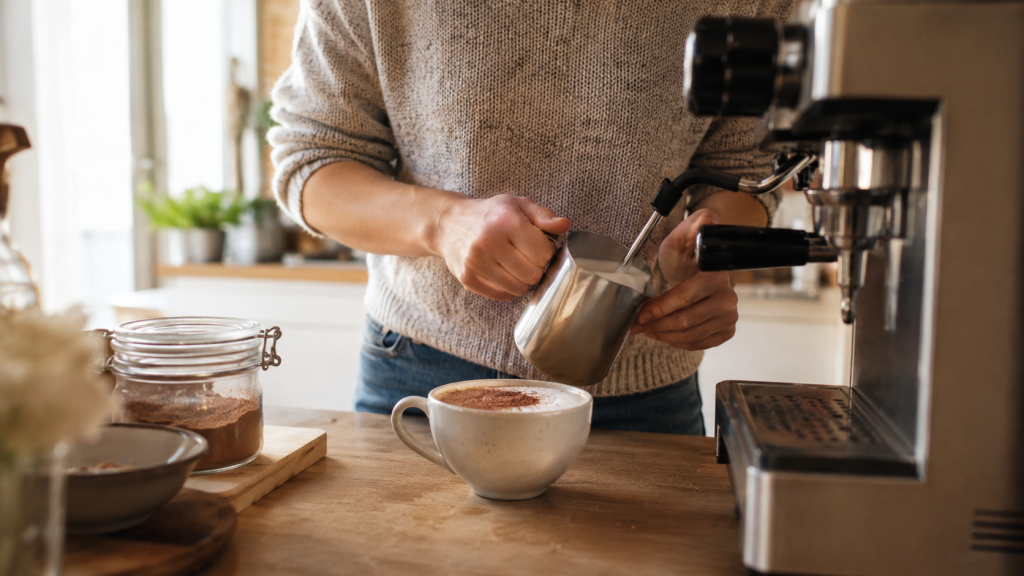
- Milk frother or steam wand: A steam wand creates the smoothest café-style foam. If you do not have one, a handheld frother, electric frother, or even a French press can help.
- Small cup: A 5- to 6-ounce cup keeps the drink balanced, so the coffee flavor stays noticeable.
- Optional flavor extras: Cinnamon, cocoa powder, vanilla, caramel, or nutmeg can make your cappuccino feel more special without overpowering it.
I used to think the cup size did not matter much, but it really does. When you pour the same espresso into a giant mug and add too much milk, the drink quickly starts tasting more like warm milk than cappuccino.
How to Make Cappuccino at Home Step by Step
A homemade cappuccino does not have to be fussy. Once you get the rhythm, it becomes a simple little routine.
1. Brew the espresso
Start with one shot of espresso. If you like a stronger drink, use a double shot.
Freshly ground beans will give you better flavor and aroma. Coffee loses freshness quickly after grinding, so grinding only what you need can make a real difference.
No espresso machine? Use strong moka pot coffee or a concentrated AeroPress brew. It will not taste exactly like café espresso, but it can still give you a rich and satisfying cappuccino-style drink.
2. Warm the milk
Heat the milk until it feels hot but not boiling. If milk gets too hot, it can lose its natural sweetness and taste a little flat.
You want it warm, smooth, and pleasant. Think cozy, not scalding.
3. Froth the milk
Froth the milk until it looks soft and glossy. The goal is not a mountain of stiff foam. You want tiny bubbles that make the milk feel silky.
Large bubbles can make the foam feel dry or airy in the wrong way. If the milk starts looking like dish soap, you have probably added too much air.
4. Pour the milk
Pour the warm milk into the espresso first. Then gently add the foam over the top.
Try not to overload the cup with milk. A cappuccino should still taste like coffee, not just a sweet milky drink with a hint of espresso hiding somewhere in the background.
5. Add a simple topping
A light dusting of cinnamon, cocoa powder, or nutmeg can make your cappuccino feel more finished.
This step is optional, but it adds that cozy café feeling. And honestly, it makes the drink look like you tried a little harder than you did.
Easy Flavor Ideas for Homemade Cappuccino
A classic cappuccino tastes great on its own. But sometimes, a small flavor twist makes it feel like a weekend treat.
Try one of these simple ideas:
- Cinnamon cappuccino: Add a pinch of cinnamon to the espresso before pouring in the milk.
- Vanilla cappuccino: Stir in a small splash of vanilla syrup or vanilla extract.
- Mocha cappuccino: Mix in a teaspoon of cocoa powder or a little chocolate syrup.
- Caramel cappuccino: Add a small amount of caramel sauce to the espresso before adding the milk.
- Iced cappuccino twist: Use chilled espresso and cold foam for a refreshing version. For another chilled coffee idea, you can also explore this guide to cold brew concentrate and use it for bold, smooth coffee drinks.
The trick is to keep flavors light. Cappuccino works best when the espresso still has room to shine.

Tips for Better Cappuccino Every Time
A better cappuccino often comes down to small habits. None of them are difficult, but together they can make your drink taste much better.
- Use fresh beans. Fresh coffee gives your cappuccino a richer aroma and cleaner flavor.
- Grind only what you need. Ground coffee loses flavor quickly, so grind right before brewing if possible.
- Try filtered water. If your tap water tastes harsh, your coffee may taste harsh too.
- Warm your cup first. A warm cup helps your cappuccino stay hot longer.
- Tap and swirl your milk. After frothing, gently tap the pitcher and swirl the milk to remove larger bubbles.
- Taste before adding sugar. Well-steamed milk can taste naturally sweet, so you may need less sweetener than usual.
Also, give yourself room to practice. Your first few cups may not look like something from a specialty café, and that is completely fine. If the coffee tastes good and the foam feels pleasant, you are already doing well.
Conclusion
Making a great cappuccino at home comes down to a few simple things: bold coffee, warm milk, and foam that feels smooth instead of stiff or bubbly. Once you understand how each part works, the process feels much less intimidating and a lot more enjoyable. You do not need a perfect café setup to make a better cup. Fresh ingredients, a little patience, and a few smart techniques can go a long way. With practice, your homemade cappuccino can turn an ordinary coffee break into a small ritual you genuinely look forward to.
FAQs
1. What makes a homemade cappuccino taste better?
A homemade cappuccino tastes better when the coffee, milk, and foam feel balanced. Fresh coffee gives the drink depth, while smooth foam adds a creamy texture without watering down the flavor.
2. Do I need an espresso machine to make cappuccino at home?
No. An espresso machine gives the most classic result, but strong coffee from a moka pot, AeroPress, or French press can still work well.
3. What milk makes the best cappuccino foam?
Whole milk is usually the easiest choice for creamy foam. Skim milk can create more foam, while barista-style oat milk works well if you want a dairy-free option.
4. Why is my cappuccino foam too bubbly?
Your foam may turn bubbly if you add too much air or froth the milk for too long. Try keeping the frother or steam wand slightly deeper after the first few seconds so the milk can swirl and smooth out.
5. Can I make an iced cappuccino at home?
Yes. Brew espresso, let it cool slightly, pour it over ice, and top it with cold foam. Keep the coffee strong so the ice does not water down the flavor too much.