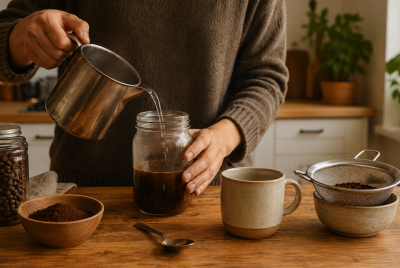
Easy Matcha Coffee Recipe at Home
We may earn a commission for purchases made using our links. Please see our disclosure to learn more.
Matcha coffee is one of those drinks that sounds fancy until you make it once and realize, “Oh, I can absolutely do this at home.” It blends the earthy, smooth flavor of matcha with the bold kick of coffee, creating a drink that feels part café latte, part green tea ritual, and part morning treat.
If you love specialty coffee but want something a little different from your usual latte, this recipe is a fun place to start. You do not need barista-level equipment, either. A small whisk, good matcha powder, freshly brewed coffee, and your favorite milk can get you surprisingly close to coffee shop quality.
What Is Matcha Coffee?
Matcha coffee is a drink made by combining matcha green tea with brewed coffee or espresso. You may also hear it called a dirty matcha latte, especially when espresso is added to a matcha latte.
The flavor is layered. Matcha brings grassy, slightly sweet, umami notes. Coffee adds depth, roastiness, and a gentle bitterness. Milk softens everything and turns it into a creamy drink that feels balanced rather than intense.
It is not traditional Japanese matcha, and it is not a classic espresso drink. Think of it as a modern specialty coffee-style drink inspired by both worlds.
Why Matcha and Coffee Work So Well Together
Matcha and coffee both have strong personalities, which is why they need a little balance. Matcha can taste earthy or vegetal. Coffee can taste bitter, chocolatey, fruity, or nutty depending on the roast. When you combine them with milk, those sharper edges mellow out.
Matcha also contains naturally occurring compounds such as catechins, caffeine, and L-theanine. A scientific review on matcha’s chemical composition notes that its antioxidant potential is linked largely to catechins, including EGCG. Another critical review found that matcha may have modest effects on stress, attention, and memory, though more research is still needed.
That makes matcha coffee appealing if you want a drink that feels energizing but a little smoother than a straight cup of coffee.
Ingredients You Need
For one serving, you will need:
- 1 teaspoon matcha powder
- 2 ounces hot water, not boiling
- 1 shot espresso or ¼ cup strong brewed coffee
- ¾ cup milk or oat milk
- 1–2 teaspoons honey, maple syrup, or vanilla syrup, optional
- Ice, if making an iced version
For the best flavor, use water around 175°F or 80°C. Boiling water can make matcha taste harsh and bitter. If you do not have a thermometer, wait about two minutes after boiling the water before adding it to the matcha.
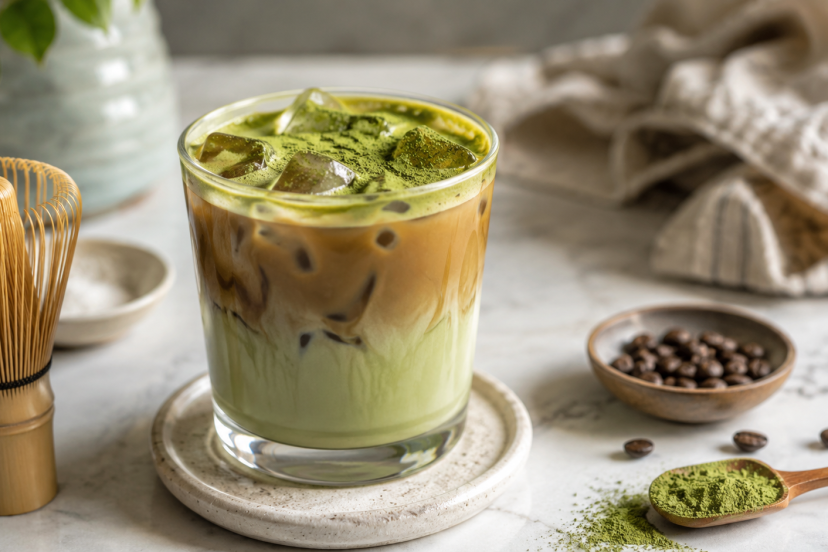
Easy Matcha Coffee Recipe
Step 1: Sift the Matcha
Add 1 teaspoon of matcha powder to a small bowl or mug. Sift it first if you can. This tiny step helps prevent clumps and gives the drink a smoother texture.
No sifter? That is fine. Just whisk a little longer.
Step 2: Whisk With Hot Water
Pour in 2 ounces of hot water. Whisk quickly in a zigzag motion until the matcha looks smooth and slightly foamy.
A bamboo whisk works beautifully, but a handheld frother also does the job. The goal is simple: no dry pockets of powder sitting at the bottom of the cup.
Step 3: Brew the Coffee
Brew one shot of espresso or make a small amount of strong coffee. A moka pot, AeroPress, espresso machine, or concentrated pour-over can work well.
Try not to use weak coffee here. Matcha has a distinct flavor, so the coffee needs enough body to show up.
Step 4: Add Milk
Warm and froth your milk for a hot matcha coffee. For an iced drink, pour cold milk over ice.
Oat milk is a favorite because it tastes naturally sweet and creamy. Whole milk gives a richer finish. Almond milk makes the drink lighter, although it can taste a little thinner.
Step 5: Combine and Sweeten
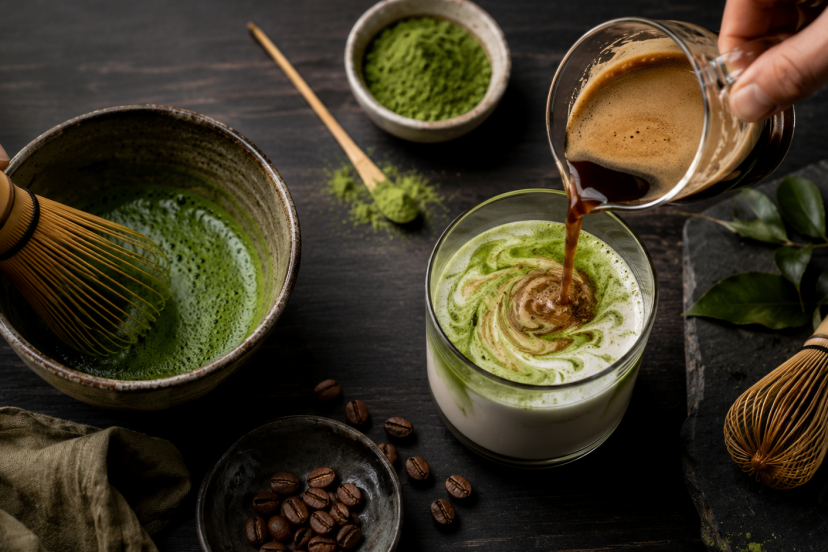
Pour the matcha into your cup, add the milk, then slowly pour the espresso or coffee over the top.
Taste before adding sweetener. Good matcha has a gentle natural sweetness, and some milks already add creaminess. If it tastes too earthy, add a small amount of honey, maple syrup, or vanilla syrup.
Hot Matcha Coffee vs. Iced Matcha Coffee
Hot matcha coffee feels cozy and smooth. It is great for slow mornings, rainy afternoons, or when you want something latte-like but different.
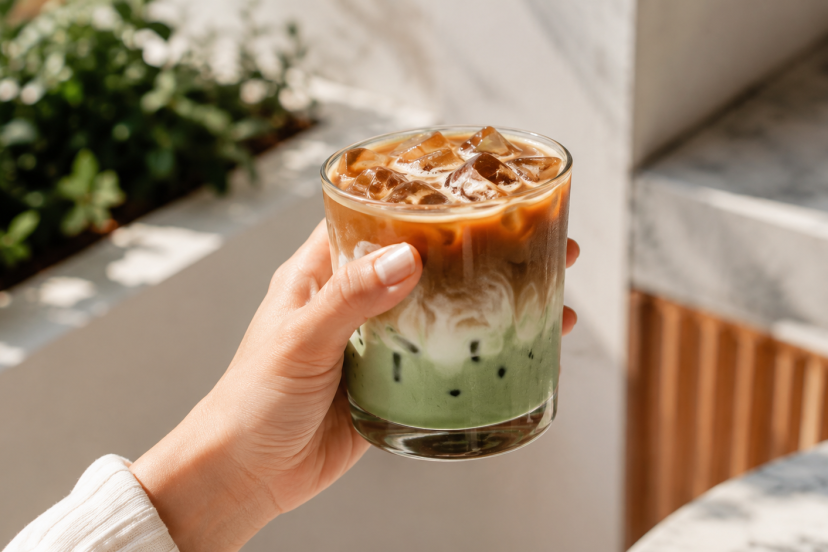
Iced matcha coffee is brighter and more refreshing. The layers also look beautiful in a clear glass, which is a nice bonus if you enjoy the café-at-home vibe.
For iced matcha coffee, build the drink like this:
- Add ice to a glass.
- Pour in milk.
- Add whisked matcha.
- Top with espresso or strong coffee.
- Stir before drinking.
The layered look is pretty, but the flavor tastes better once everything mixes.
How to Make It Taste Like a Café Drink
The secret is not adding more sugar. It is balance.
Use fresh matcha powder with a bright green color. Dull olive matcha often tastes flat or bitter. Choose coffee with chocolate, nutty, or caramel notes rather than very smoky beans. A medium roast usually works better than a dark roast.
Also, do not overdo the matcha. More powder does not always mean better flavor. One teaspoon is enough for most homemade drinks.
If you like softer coffee drinks, use only half a shot of espresso. If you want a stronger drink, use a double shot and a little extra milk.
For days when you want the creamy comfort without as much caffeine, you may also enjoy experimenting with decaf lattes using the same milk and frothing methods.
Common Mistakes to Avoid
Using Boiling Water
Boiling water can make matcha taste bitter. Slightly cooled water helps protect the matcha’s flavor and keeps it tasting smooth.
Skipping the Whisking Step
Matcha powder does not dissolve like instant coffee. It needs to be suspended in water. Whisking gives it a smoother texture and prevents gritty sips.
Choosing the Wrong Matcha
Ceremonial grade matcha usually tastes smoother for drinks with less sugar. Culinary grade matcha can work, but it may taste stronger and more bitter. If you plan to make sweet iced matcha coffee, culinary grade can still be fine.
Adding Too Much Coffee
Coffee should support the matcha, not completely bury it. Start with one shot or ¼ cup strong coffee, then adjust from there.
Forgetting the Milk Balance
A splash of milk may not be enough. Matcha coffee tastes best when the milk creates a bridge between the tea and coffee flavors.
Recommended Products
Here are five useful products to consider for making matcha coffee at home:
1. Encha Ceremonial Grade Matcha Powder
This is a good option if you want a smoother, more traditional matcha base. This product is first-harvest, shade-grown matcha from Uji, Japan, with no added sugar or fillers.
2. Naoki Matcha Superior Ceremonial Blend
Naoki Matcha is another solid pick for homemade matcha drinks. A Japanese ceremonial grade matcha made from shade-grown, first-harvest tea leaves from Uji, Kyoto.
3. Aerolatte Matcha Tea and Milk Frother
A handheld frother is helpful if you do not want to use a bamboo whisk every morning. Aerolatte’s matcha frother is designed for frothing matcha and other drinks quickly.
4. Matcha Mate Electric Matcha Whisk
This is useful for anyone who wants smooth, clump-free matcha with less effort. It has a compact design and ability to blend matcha into a creamy texture.
5. Icesip 15 oz Matcha Cup Set
Clear glass cups are great for iced matcha coffee because you can see the layers. The Icesip set is listed as glass matcha cups with straws, making it a practical choice for iced lattes and coffee-style drinks.
What Research Says About Matcha
Matcha gets a lot of attention because you consume the powdered tea leaf rather than steeping and removing leaves. That means the drink may contain higher amounts of certain compounds compared with regular brewed green tea.
A detailed review published in Molecules explains that matcha contains catechins, phenolic acids, rutin, quercetin, vitamin C, chlorophyll, and caffeine, all of which contribute to its chemical profile. Harvard Health’s review of matcha’s possible health benefits also notes that matcha contains antioxidants, including catechins, along with phytochemicals such as chlorophyll and quercetin.
That said, it is important not to treat matcha as a miracle drink. Matcha coffee is not magic in a cup. It is simply a flavorful drink that can fit into a balanced routine, especially if it helps you enjoy your morning caffeine more mindfully.
Conclusion
Making matcha coffee at home is easier than it looks. Start with good matcha, use hot but not boiling water, brew a small amount of strong coffee, and let milk bring everything together. Once you get the basic recipe down, you can adjust it to your taste—hot, iced, sweeter, stronger, creamier, or lighter. It is a simple specialty-style drink that gives your coffee routine a fresh twist without needing a full café setup.
FAQs
1. Does matcha coffee have more caffeine than regular coffee?
The answer depends on the way you prepare it. Matcha contains caffeine, and adding espresso or strong coffee increases the total amount. If you are caffeine-sensitive, start with less coffee or use decaf espresso.
2. Can I make matcha coffee without espresso?
Yes. Strong brewed coffee works well. Use about ¼ cup so the drink has enough coffee flavor without becoming watery.
3. Is matcha coffee better hot or iced?
Both work. Hot matcha coffee tastes cozy and creamy, while iced matcha coffee feels refreshing and café-style. Iced is especially good with oat milk and vanilla syrup.
4. What milk tastes best with matcha coffee?
Oat milk is one of the best choices because it is creamy and slightly sweet. Whole milk, soy milk, and almond milk also work, depending on the flavor and texture you like.
5. Why does my matcha coffee taste bitter?
The most common reasons are boiling water, low-quality matcha, too much powder, or overly dark coffee. Use warm water, sift the matcha, and start with one teaspoon of powder.